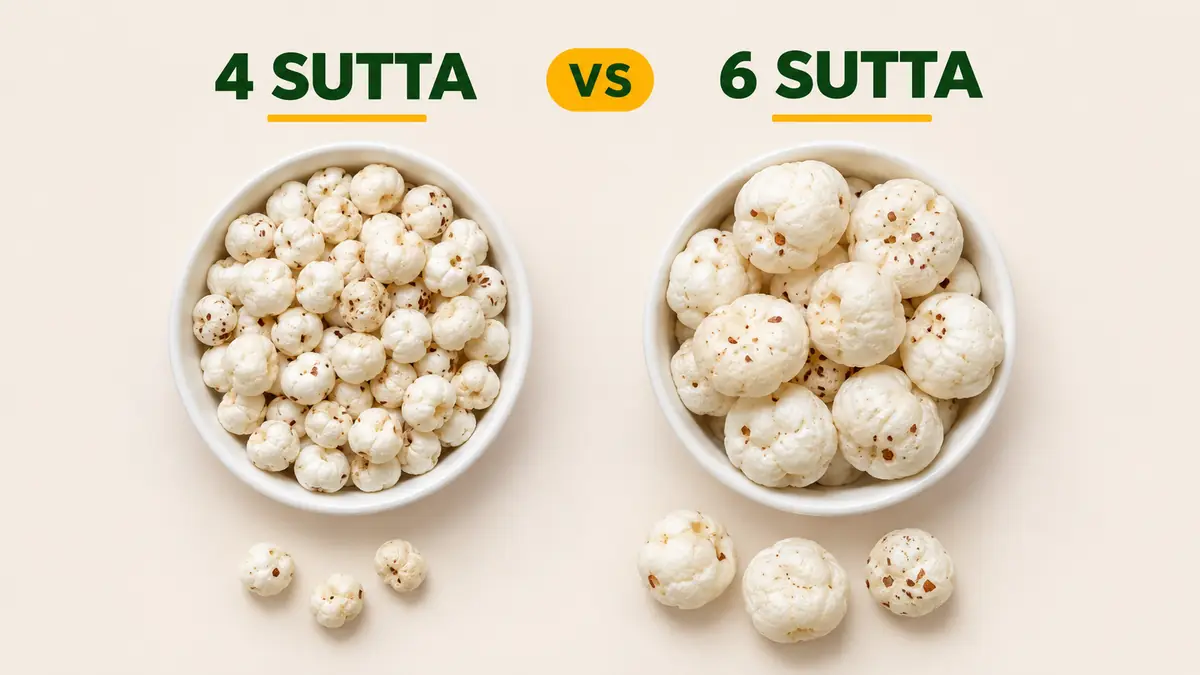
When you buy makhana you will often see a number followed by "sutta", for example 4 sutta or 6 sutta. This is the trade grading of popped makhana by size. The short answer: size changes only the look and the price, not the taste or the nutrition.
What does sutta mean?
Sutta is the size grade of the popped puff. In general, a higher number means larger, fuller puffs, and a lower number means smaller ones. Makhana is sorted by hand and by sieve so that every pack has puffs of a similar size.
4 sutta vs 6 sutta at a glance
| Point | 4 sutta | 6 sutta |
|---|---|---|
| Puff size | Smaller | Larger |
| Look | Compact puffs | Big, bright white puffs |
| Taste | Same | Same |
| Nutritional value | Same | Same |
| Price | Lower | Higher |
Does size change taste or nutrition?
No. A small puff and a large puff are the same seed popped to a different size, so the taste and the nutritional value do not depend on the grade. Bigger makhana simply looks better in the pack and on the plate.
Why is bigger makhana costlier?
Price follows size: the bigger the puff, the higher the price, and the smaller the puff, the lower the price. So you pay more for 6 sutta mainly for its appearance, not for any extra taste or nutrition.
The exact size of each grade can differ slightly from one supplier to another, so check the grade and pack details on the product page before you order.
Which should you choose?
- For everyday snacking, roasting and cooking: 4 sutta gives the same taste and nutrition at a lower price.
- For gifting and a premium look: 6 sutta looks bigger and brighter, so it suits gift packs and presentation.
- For resale: pick the grade that matches your customer and price point.
See the grades we currently pack on our products page. For shops, retailers and distributors, use the bulk quote form.